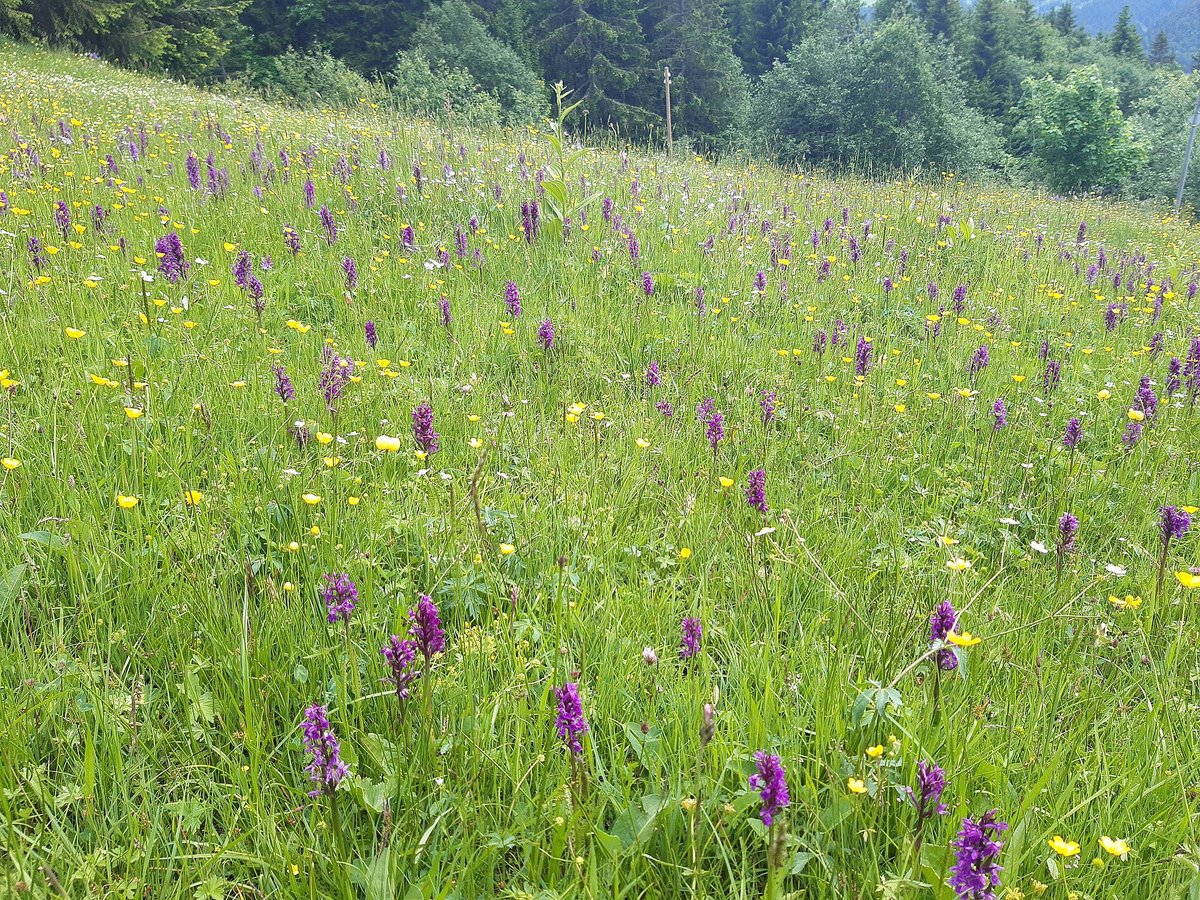
Swiss Alpine Flower Meadow — Graubünden
The high alpine meadows of Graubünden — Switzerland's largest and most remote canton — produce Europe's most floristically diverse subalpine grassland each July and August, with botanically unimproved hay meadows above 1,500 metres containing up to 70 plant species per square metre in a polychrome display of purple martagon lilies, yellow arnica, blue monkshood, pink bistort, and white globe flowers that covers entire valley sides in a tapestry of colour beneath the Rhaetian Alps. The Engadine valley and the meadows above Pontresina, Scuol, and the Albula Pass are among the richest sites, where traditional Graubünden farming practices — single annual hay cuts without fertiliser — have maintained meadow botanical diversity unchanged since the 19th century. Walking the valley floor trails in high summer, the air thick with the fragrance of cut hay and wild flowers and the sound of cowbells from Braunvieh cattle on the upper slopes, creates a Swiss pastoral experience of extraordinary sensory completeness. The backdrop of the Bernina massif and Piz Kesch peaks, snow-covered and glaciated above the flower-rich meadows below, provides the definitive Swiss Alpine composition. The endangered Apollo butterfly feeds on yellow stonecrop on the same limestone outcrops where the richest meadow flora occurs.
About this spectacle
Walking the high alpine meadows of Graubünden in July and August is an immersion in Europe's richest subalpine grassland. Valley sides above 1,500 metres are draped in a polychrome tapestry: purple martagon lilies rise above carpets of yellow arnica, blue monkshood shoulders against pink bistort, and white globe flowers catch the morning light. The air carries the thick, sweet scent of cut hay mingled with wild flower perfume, while the distant ring of cowbells from Braunvieh cattle drifts down from higher slopes. Botanically unimproved hay meadows — maintained by a single annual cut, no fertiliser — hold up to 70 plant species per square metre, a density unchanged since the 19th century. Above the bloom, the Bernina massif and Piz Kesch rise snow-covered and glaciated, providing the definitive Swiss Alpine backdrop. On limestone outcrops threading through the meadows, the endangered Apollo butterfly patrols yellow stonecrop. The Engadine valley and meadows above Pontresina, Scuol, and the Albula Pass are the richest sites for this extraordinary convergence of fragrance, colour, and mountain grandeur.
When to go
Jun — Sep, peak Jul — Aug
Getting there
Nearest airport: ZRH. Nearest city: Chur.
Booking options
Goyova doesn't process bookings directly. When you tap "Plan this trip" in the app, you'll see options from our partner providers — accommodation, tours, transport — with affiliate links where applicable. See our affiliate disclosure for details.
More like this.
 Peak season
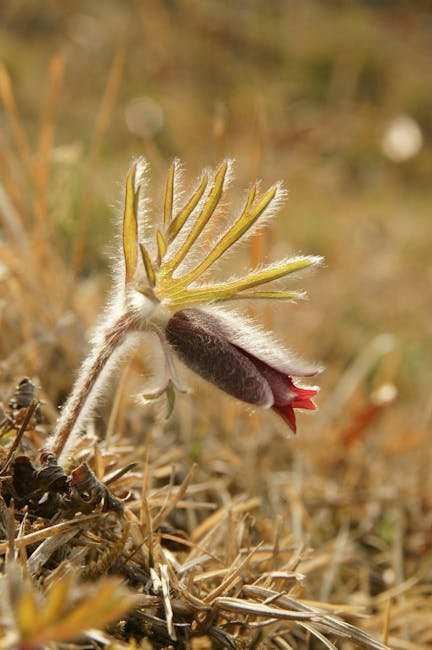
 Adonisröschen-Blüte Karlstadter Trockenrasen
Germany
 Peak season
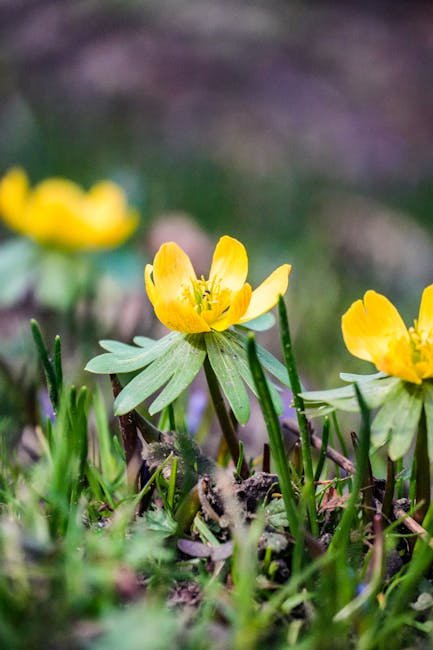
 Adonisröschen-Blüte Kyffhäuser
Germany
 Peak season
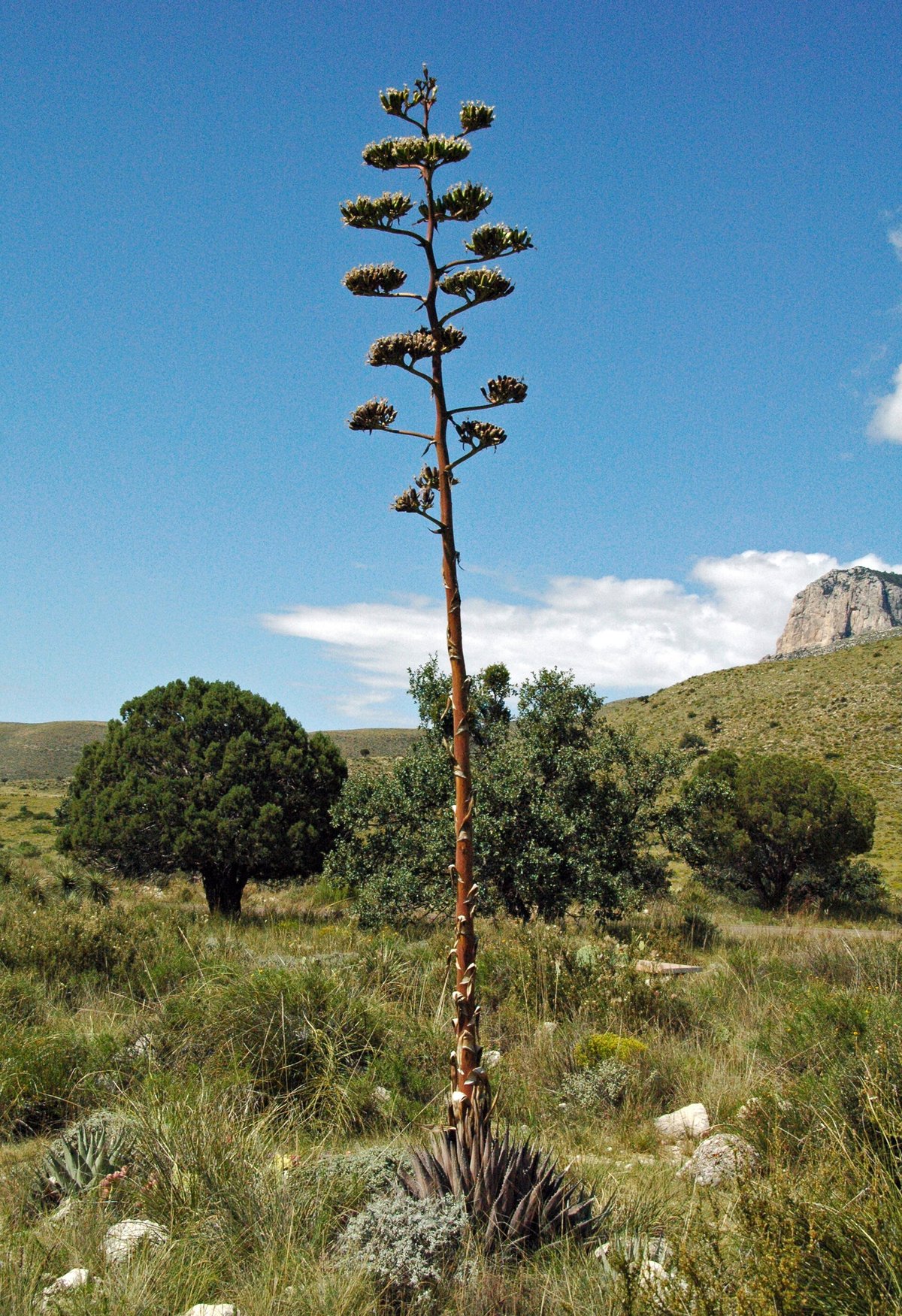
 Agave Century Plant Mass Bloom — Oaxaca Mexico
Oaxaca City, Oaxaca, Mexico