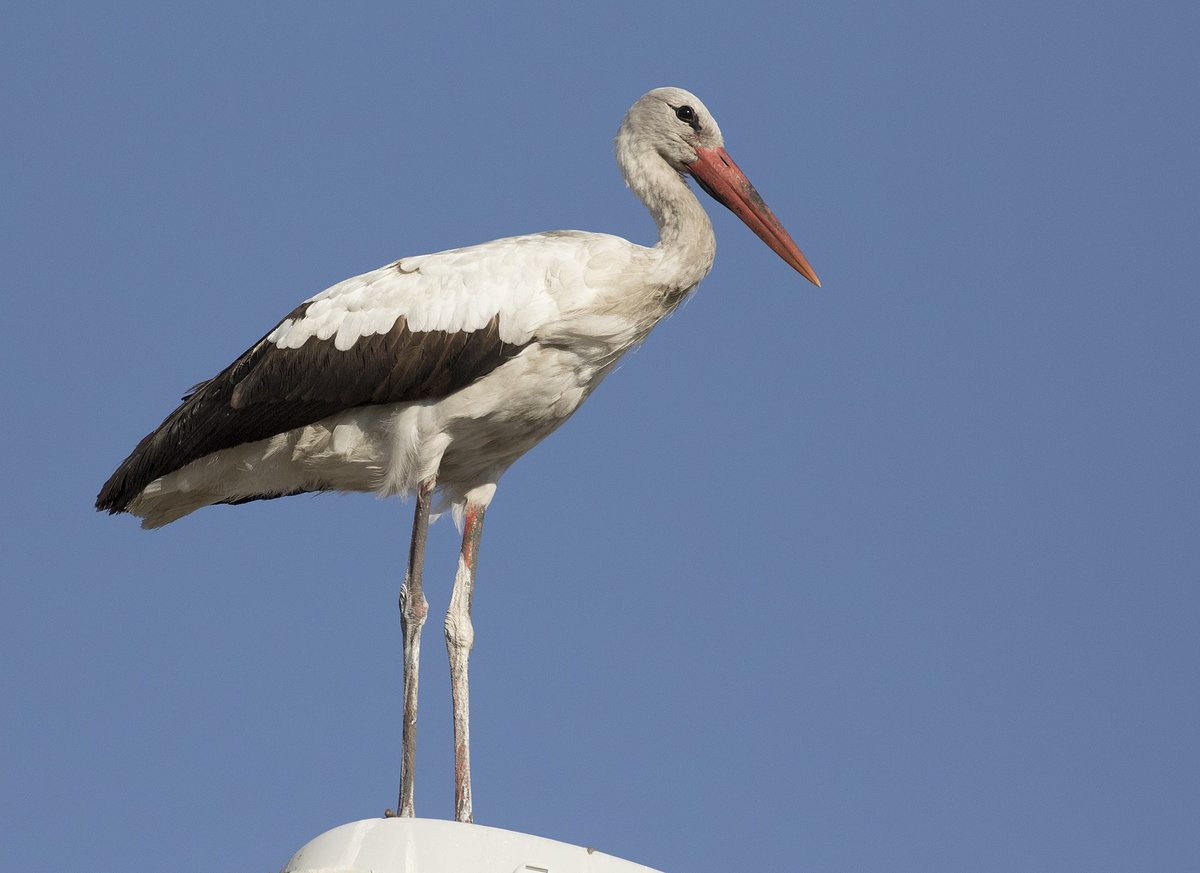
White Stork Autumn Staging — Extremadura
Each August and September, the plains of Extremadura become one of Europe's most spectacular raptor and stork staging areas as tens of thousands of white storks from across northern and central Europe concentrate on the dehesa grasslands before crossing into Africa, with single day counts at the Puerto de Honduras and Puerto de San Vicente pass exceeding 30,000 storks in continuous southward flight from dawn to dusk. The storks funnel through the Extremadura passes on their migration south, and standing at a ridge-top viewpoint watching an unbroken stream of birds crossing the horizon — their white and black wings glinting in the August sun and their slow effortless soaring circles rising on thermals before streaming south — creates one of Europe's most overwhelming bird migration spectacles. The dehesa oak woodland below the passes simultaneously hosts bee-eaters on their own southward migration, black kites in their thousands, and the resident Spanish imperial eagles and great bustards that make Extremadura Europe's richest single-region wildlife destination. The stork passage coincides with the grain harvest in the Extremaduran fields, and the birds' habit of feeding en masse in freshly cut cereal stubble creates accessible ground-level encounters with thousands of storks simultaneously. No specialist knowledge or equipment is needed — the scale of the spectacle is visible to any observer at the pass viewpoints.
About this spectacle
Standing at the ridge-top viewpoints of Puerto de Honda or Puerto de San Vicente in August and September, visitors witness an unbroken river of white storks streaming southward from dawn to dusk — single-day counts can exceed 30,000 birds crossing the horizon in continuous flight. The storks soar on thermals in loose spiralling columns before peeling south, their white and black wings catching the summer light. Below the passes, the dehesa oak grasslands host simultaneous waves of black kites in their thousands and bee-eaters passing on their own journey south. In the harvested cereal fields, storks descend en masse to feed, allowing ground-level encounters with thousands of birds at close range. The full spectacle unfolds without specialist knowledge or optical equipment — the sheer volume of birds overhead is overwhelming to any observer. Resident Spanish imperial eagles and great bustards add further wildlife depth to what the curator notes is Europe's richest single-region wildlife destination.
When to go
Aug — Sep
Getting there
Nearest airport: BJZ. Nearest city: Cáceres.
Booking options
Goyova doesn't process bookings directly. When you tap "Plan this trip" in the app, you'll see options from our partner providers — accommodation, tours, transport — with affiliate links where applicable. See our affiliate disclosure for details.
More like this.
 Peak season
 Aardvark Night Foraging — Kalahari Botswana
Maun, Central District, BW
 Peak season
 Aardvark Night Foraging — Kalahari South Africa
Upington, Northern Cape, South Africa
 Returns Jan 2027
 Adélie Penguin Highway — Ross Sea Antarctica
Cape Royds, Antarctica, AQ