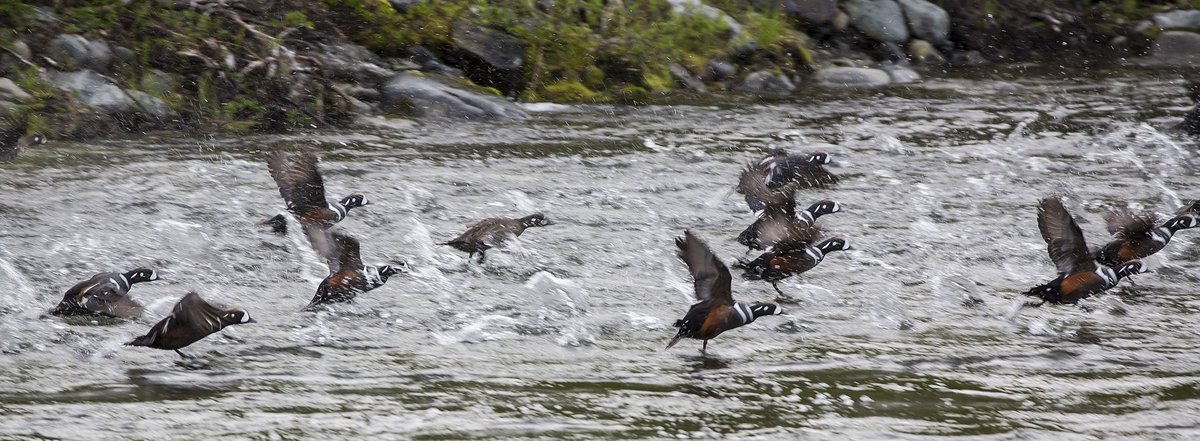
Waterfowl Winter Gathering — Lake Constance Bodensee Baden-Württemberg
Each November through February, Lake Constance — the Bodensee, straddling the borders of Germany, Austria, and Switzerland — hosts Central Europe's most important inland waterfowl wintering concentration as tufted ducks, pochards, goldeneye, and goosanders gather in flocks of up to 300,000 birds on the lake's open water, their rafts visible from the German shore between Konstanz and Friedrichshafen as dark masses that periodically erupt in mass take-offs of extraordinary visual scale. The Bodensee's combination of mild temperature moderated by the lake's thermal mass, abundant submerged vegetation, and the absence of ice in all but the coldest winters creates one of the most reliable wintering waterfowl sites in the Alpine region, and the lake's accessibility from Stuttgart, Zurich, and Munich makes it Central Europe's most visited inland birding destination in winter. The western Untersee section near Radolfzell and the Wollmatinger Ried reed bed provide the finest close-range waterfowl viewing, and the NABU reserve at Mettnau Peninsula offers hides overlooking the most concentrated diving duck flocks. The surrounding Bodensee landscape — the Hegau volcanic plugs, the Alpine foothills of Vorarlberg above the Austrian shore, and the medieval town of Konstanz at the lake's western outlet — creates a distinctly Central European winter lake landscape of considerable beauty. Rare winter visitors including red-throated diver, smew, and black-throated diver appear annually in the diving duck flocks.
About this spectacle
From November through February, Lake Constance transforms into a vast open-air theatre of diving ducks. Standing on the shores between Konstanz and Friedrichshafen, visitors watch dark rafts of up to 300,000 tufted ducks, pochards, goldeneye, and goosanders sitting low on the grey winter water. Periodically these masses erupt without warning into thunderous mass take-offs — a wall of wingbeats and rushing air that draws gasps from even seasoned birders. The NABU reserve hides at Mettnau Peninsula place you close enough to watch pochards surface with beakfuls of vegetation, while the Wollmatinger Ried reed beds add the rustle of wetland grasses to the acoustic texture of the morning. Rare birds — smew, red-throated diver, black-throated diver — appear regularly within the diving duck flocks. Behind the lake, the Hegau volcanic plugs and snow-dusted Alpine foothills of Vorarlberg provide a strikingly beautiful backdrop. The air is cold and often misty, the light low and silvery, and the sheer biomass of birds on the open water is unlike anything else in Central Europe in winter.
When to go
Nov — Mar, peak Nov — Feb
Getting there
Nearest airport: FDH. Nearest city: Konstanz.
Booking options
Goyova doesn't process bookings directly. When you tap "Plan this trip" in the app, you'll see options from our partner providers — accommodation, tours, transport — with affiliate links where applicable. See our affiliate disclosure for details.
More like this.
 Peak season
 Aardvark Night Foraging — Kalahari Botswana
Maun, Central District, BW
 Peak season
 Aardvark Night Foraging — Kalahari South Africa
Upington, Northern Cape, South Africa
 Returns Jan 2027
 Adélie Penguin Highway — Ross Sea Antarctica
Cape Royds, Antarctica, AQ