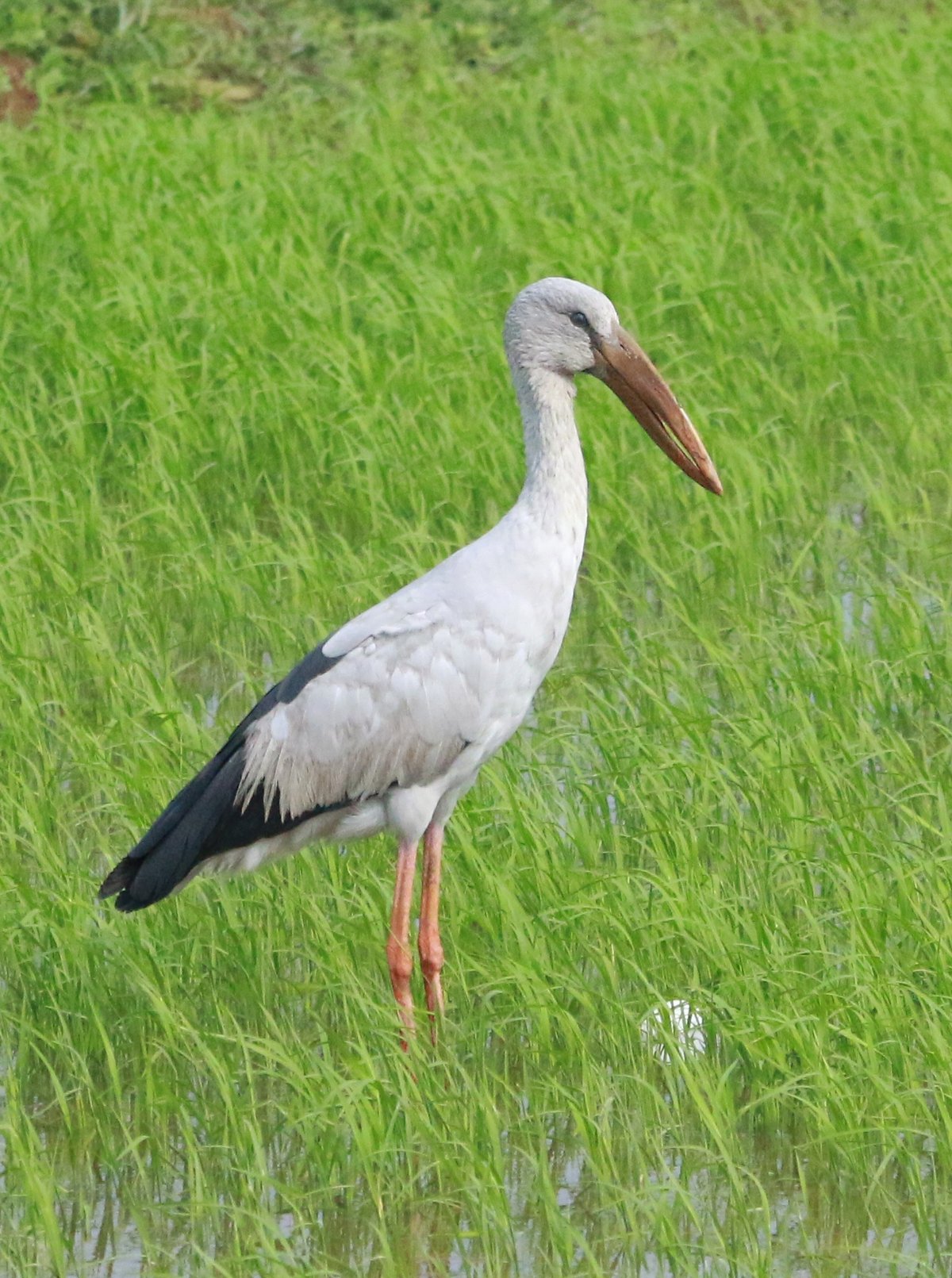
Wading Bird Spectacle — Doñana Marismas
Each spring and early summer, the Marismas marshes of Doñana National Park flood to create Europe's largest seasonal wetland and the most important waterbird breeding site on the continent, with up to 150,000 pairs of herons, egrets, spoonbills, storks, and ibises nesting in the cork oak and umbrella pine groves above the waterline in colonial rookeries of staggering density and noise. The mixed heronry of El Rocío — where purple heron, night heron, squacco heron, cattle egret, little egret, great white egret, glossy ibis, and white stork nest in the same stands of stone pine within sight of a whitewashed Andalusian hermitage village — is the most species-diverse colonial nesting assemblage in Western Europe. Boat trips on the Guadalquivir through the flooded Marismas in April and May pass flocks of spoonbills in brilliant white breeding plumage, marbled ducks in the marsh margins, and the extraordinary convergence of thousands of herons commuting between colony and feeding grounds. The Marismas' water level depends entirely on winter rainfall and varies dramatically between years, but in wet years the spectacle of an entirely flooded plain from horizon to horizon with waterbirds at every scale is genuinely overwhelming. The Doñana also holds the last 30 pairs of Iberian imperial eagles and a significant wintering flamingo population.
About this spectacle
Standing at the edge of the Doñana Marismas in April or May, you are assaulted by sound before you see anything: the constant roar of tens of thousands of birds calling, arguing, and feeding across a flooded plain that stretches to the horizon. Stone pine groves above the waterline are white with nesting egrets and ibises, their branches bowed under the weight of hundreds of nests packed so tightly that the trees seem to pulse. At dawn, columns of herons and spoonbills lift off in a continuous stream toward feeding grounds, the air thick with wingbeats. Boat trips along the Guadalquivir push through shimmering channels where marbled ducks paddle among the reed margins and spoonbills in full breeding plumage probe the shallows just metres away. The heronry at El Rocío mixes seven or eight species in the same grove — purple herons threading through lower branches while white storks clatter overhead and glossy ibises flash iridescent bronze in the morning light. In a wet year, with water covering the entire plain, the scene is simply one of the most overwhelming concentrations of breeding waterbirds accessible anywhere in Europe.
When to go
Jan — Dec, peak Apr — May
Getting there
Nearest airport: SVQ. Nearest city: Huelva.
Booking options
Goyova doesn't process bookings directly. When you tap "Plan this trip" in the app, you'll see options from our partner providers — accommodation, tours, transport — with affiliate links where applicable. See our affiliate disclosure for details.
More like this.
 Peak season
 Aardvark Night Foraging — Kalahari Botswana
Maun, Central District, BW
 Peak season
 Aardvark Night Foraging — Kalahari South Africa
Upington, Northern Cape, South Africa
 Returns Jan 2027
 Adélie Penguin Highway — Ross Sea Antarctica
Cape Royds, Antarctica, AQ