Vatnajökull Blue Ice Cave Season — Iceland
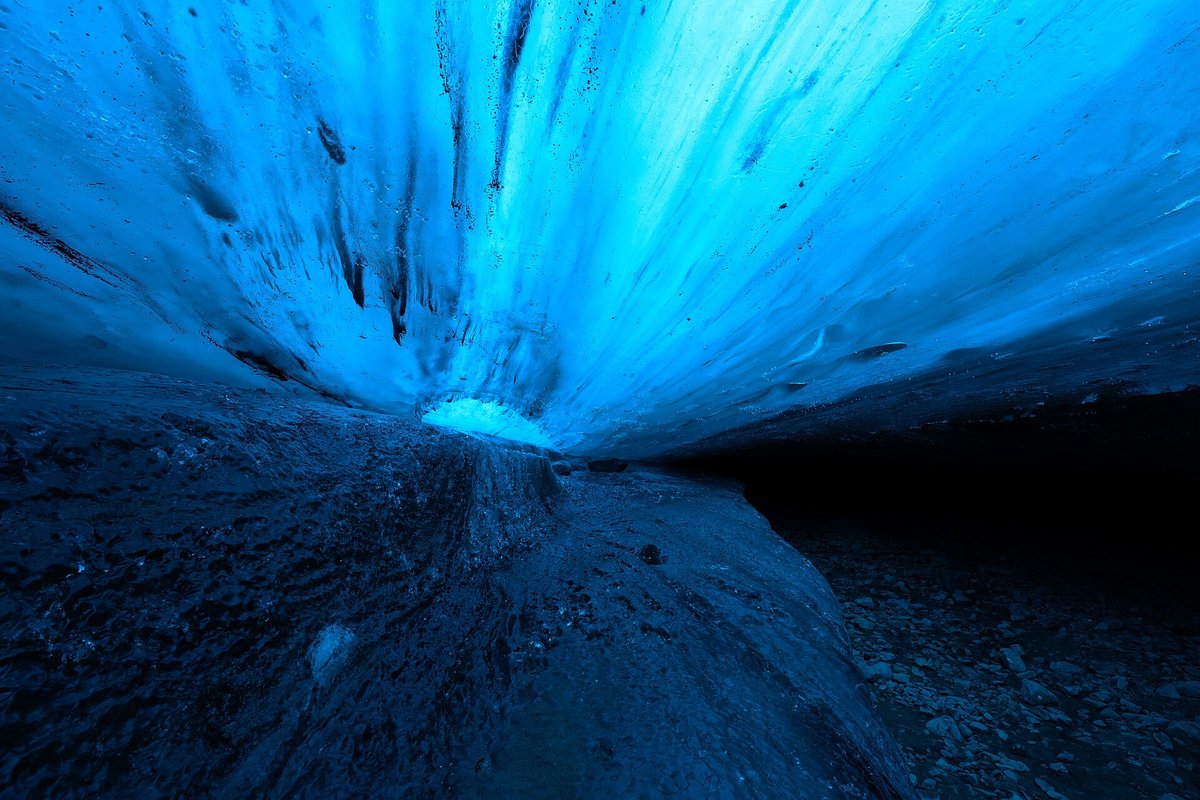
The blue ice caves inside Vatnajökull glacier — Europe's largest ice mass at 7,900 square kilometres — are accessible only from November to March when the ice is cold enough to prevent ceiling collapse, and their interior spaces are among the most extraordinary natural environments on Earth. Glacial ice compressed to the point of excluding air bubbles absorbs all wavelengths of visible light except blue, creating interiors of such intense cerulean and cobalt that the human eye struggles to identify a comparable reference. The cave shapes are dynamic — formed by subglacial meltwater drainage channels whose geometry changes every winter — meaning no two seasons offer the same architecture. Crystal ice formations, translucent ceiling domes, and sections where the glacier floor meets ancient volcanic basalt provide geological layering unavailable in any surface landscape. Guides provide crampons and helmets for a 2–3 hour experience that consistently ranks as the single most visually memorable natural environment visitors have encountered.
About this spectacle
Stepping inside a Vatnajökull blue ice cave is stepping into a world your eyes have no framework for. The compressed glacial ice overhead glows in shades ranging from pale aquamarine to deep cobalt, the colour intensifying toward the ceiling where ice is thickest and most ancient. Sounds are muffled by the glacier's mass, and the air carries a mineral cold unlike anything above ground. Every surface is a composition of translucent blue panels, cloudy white inclusions, and dark volcanic basalt where the glacier meets Iceland's bedrock — a geological sandwich millions of years in the making. The cave geometry shifts each winter as subglacial meltwater carves new drainage channels, so each season's architecture is unrepeatable. Crampons crunch on the ice floor as guides lead small groups through domed chambers and narrow passages. Light entering from natural openings refracts through the ice ceiling in ways that change minute to minute. The cumulative sensory effect — visual, acoustic, thermal — is overwhelming in the best sense, and consistently described by visitors as unlike any other experience in nature.
When to go
Nov — Mar
Getting there
Nearest airport: KEF. Nearest city: Reykjavík.
Booking options
Goyova doesn't process bookings directly. When you tap "Plan this trip" in the app, you'll see options from our partner providers — accommodation, tours, transport — with affiliate links where applicable. See our affiliate disclosure for details.
More like this.
 Peak season
 9-foot Stake Coral Reef — United States
Florida, United States
 Peak season
 Aachtopf
BW, Germany
 In season
 Aammiq Wetland — Lebanon
Beqaa Governorate, LB