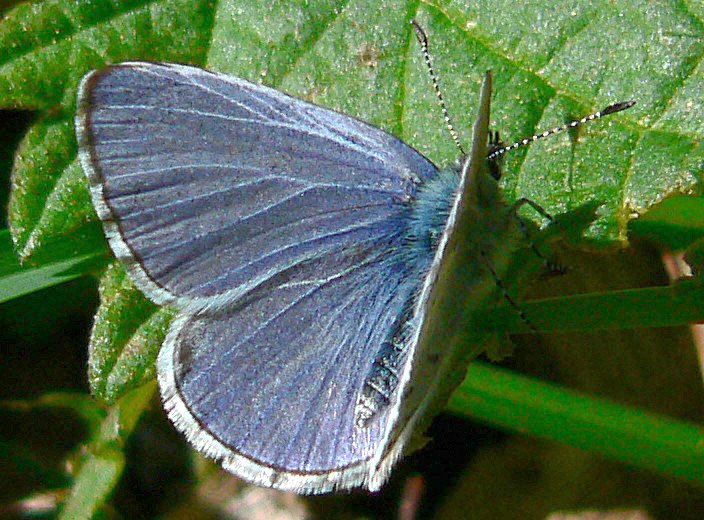
Spring Azure Butterfly — Cévennes
Each April and May, the garrigue limestone hillsides of the Cévennes National Park in the southern Massif Central of France host one of Western Europe's most spectacular spring butterfly displays as Adonis blue, chalkhill blue, sooty copper, and the rare Provençal short-tailed blue emerge simultaneously on the warm south-facing slopes, their vivid metallic blue and orange wings covering the thyme and horseshoe vetch with a moving shimmer of colour on warm May mornings. The Cévennes holds the greatest butterfly diversity of any French national park — over 130 species have been recorded — and the limestone garrigue habitat that produces this richness also blooms simultaneously with wild lavender, rock roses, and orchids creating a combined botanical and entomological display of extraordinary Mediterranean richness in a northern inland setting. Walking the Cévennes' granite ridges and limestone causse plateaux in May, with griffon vultures soaring above and the hillsides below moving with butterfly wings, creates a French wilderness experience of considerable power. The nearby Causses — the great limestone plateaux of the Larzac, Méjean, and Noir — add further butterfly-rich habitats and some of France's most dramatic upland landscapes. The Cévennes is the only French national park inhabited since prehistoric times, adding ancient terrace agriculture, silk-moth culture, and Huguenot history to the natural spectacle.
About this spectacle
On warm May mornings across the limestone garrigue of Cévennes National Park, south-facing slopes come alive with an extraordinary density of butterfly wings. Adonis blues and chalkhill blues settle on horseshoe vetch, their metallic turquoise catching the angled light, while sooty coppers and the rare Provençal short-tailed blue drift between patches of thyme. The hillsides shimmer and pulse as hundreds of wings open and close simultaneously. The display deepens because the garrigue blooms at the same moment — wild lavender, rock roses, and orchids extending the spectacle across every sense. Overhead, griffon vultures ride thermals above the granite ridges. The combination of over 130 recorded species, simultaneous wildflower bloom, and an open upland landscape with long sightlines makes this one of Western Europe's most visually saturated spring mornings. The causse plateaux — Larzac, Méjean, and Noir — extend the habitat beyond the core park, adding dramatic limestone skylines to the entomological richness.
When to go
Apr — Oct, peak Apr — May
Getting there
Nearest airport: MPL. Nearest city: Montpellier.
Booking options
Goyova doesn't process bookings directly. When you tap "Plan this trip" in the app, you'll see options from our partner providers — accommodation, tours, transport — with affiliate links where applicable. See our affiliate disclosure for details.
More like this.
 Peak season
 Aardvark Night Foraging — Kalahari Botswana
Maun, Central District, BW
 Peak season
 Aardvark Night Foraging — Kalahari South Africa
Upington, Northern Cape, South Africa
 Returns Jan 2027
 Adélie Penguin Highway — Ross Sea Antarctica
Cape Royds, Antarctica, AQ