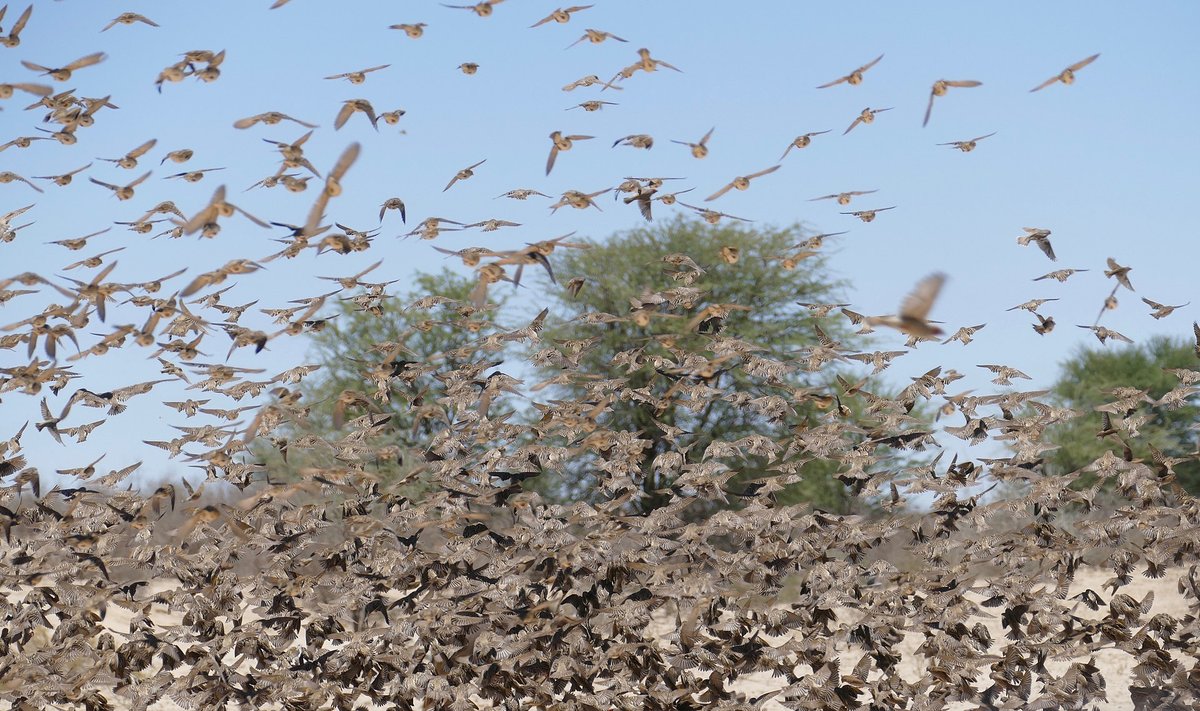
Red-Billed Quelea Flock — Botswana Okavango
The red-billed quelea (Quelea quelea) flock — the world's most numerous wild bird species with an estimated population of 1.5 billion birds, the flocks' liquid murmuration-like movements across the Kalahari and Okavango's open grasslands creating one of Africa's most visually overwhelming bird spectacles — concentrates in the Okavango's annual grass seed production from December through March. A flock of 10 million queleas (not uncommon in the Okavango's riparian grasslands) darkens the sky for 30 minutes in continuous passage, the combined wingbeat sound audible 2 kilometres away and the shape-shifting pattern of millions of birds changing direction simultaneously creating a fluid aerial sculpture of extraordinary complexity. The quelea's status as the world's most economically damaging bird (consuming 50 tonnes of grain daily per million-bird flock, causing annual losses of $50 million to African grain farmers) gives each spectacle observation a socio-ecological dimension as complex as any purely aesthetic appreciation.
About this spectacle
Standing in the Okavango's open riparian grasslands between December and March, visitors witness one of the most overwhelming avian spectacles on Earth. A flock of red-billed queleas — potentially tens of millions of birds — rises and turns as a single fluid entity, the collective wingbeats producing a deep, continuous roar audible two kilometres away. The sky darkens as dense columns of birds ripple and contract in murmuration-like formations, shifting shape with liquid precision for up to thirty minutes of unbroken passage. The sheer scale defies comprehension: the air thrums, shadows race across the ground below the flock, and the chorus of wingbeats and calls is felt as much as heard. Dawn light catches the coppery-red bills of passing birds in flashes, while the grassland stretches to every horizon, amplifying the sense of biological abundance. The knowledge that each million-bird flock consumes fifty tonnes of grain daily layers the visual spectacle with a striking ecological tension.
When to go
Dec — Mar
Getting there
Nearest airport: MUB. Nearest city: Maun.
Booking options
Goyova doesn't process bookings directly. When you tap "Plan this trip" in the app, you'll see options from our partner providers — accommodation, tours, transport — with affiliate links where applicable. See our affiliate disclosure for details.
More like this.
 Peak season
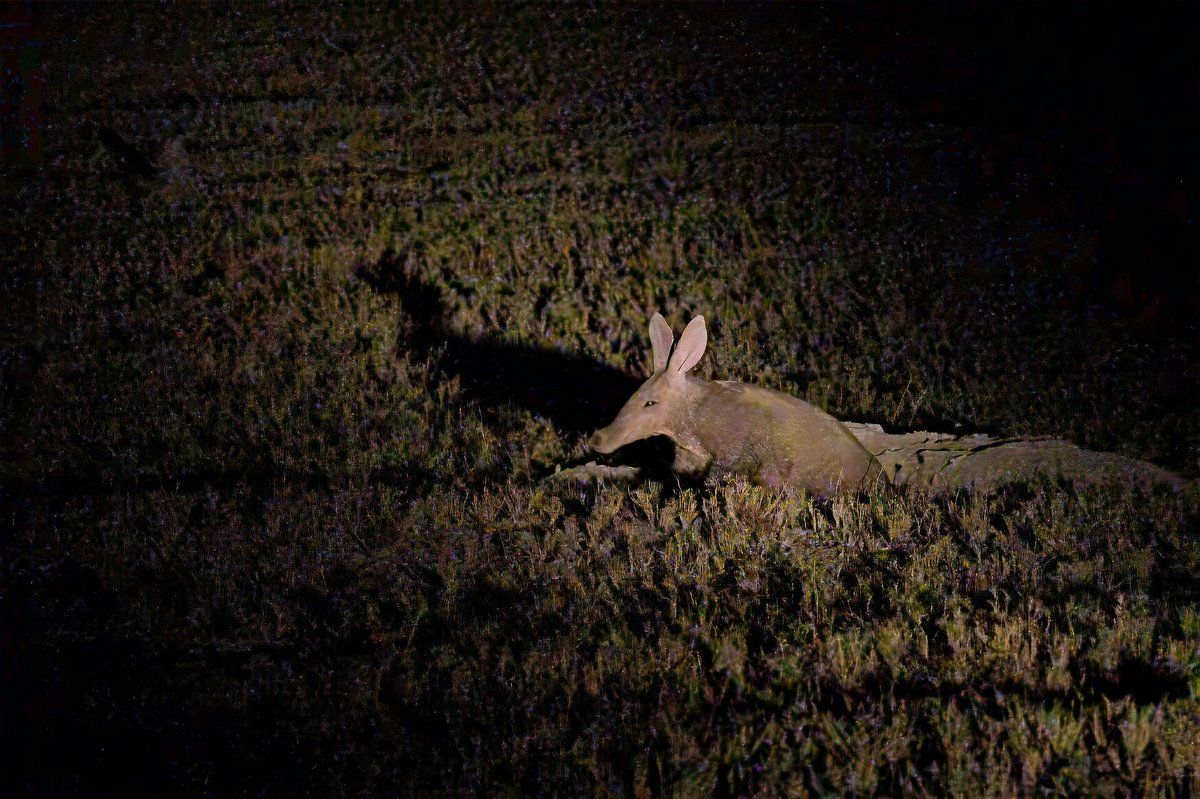
 Aardvark Night Foraging — Kalahari Botswana
Maun, Central District, BW
 Peak season
 Aardvark Night Foraging — Kalahari South Africa
Upington, Northern Cape, South Africa
 Returns Jan 2027
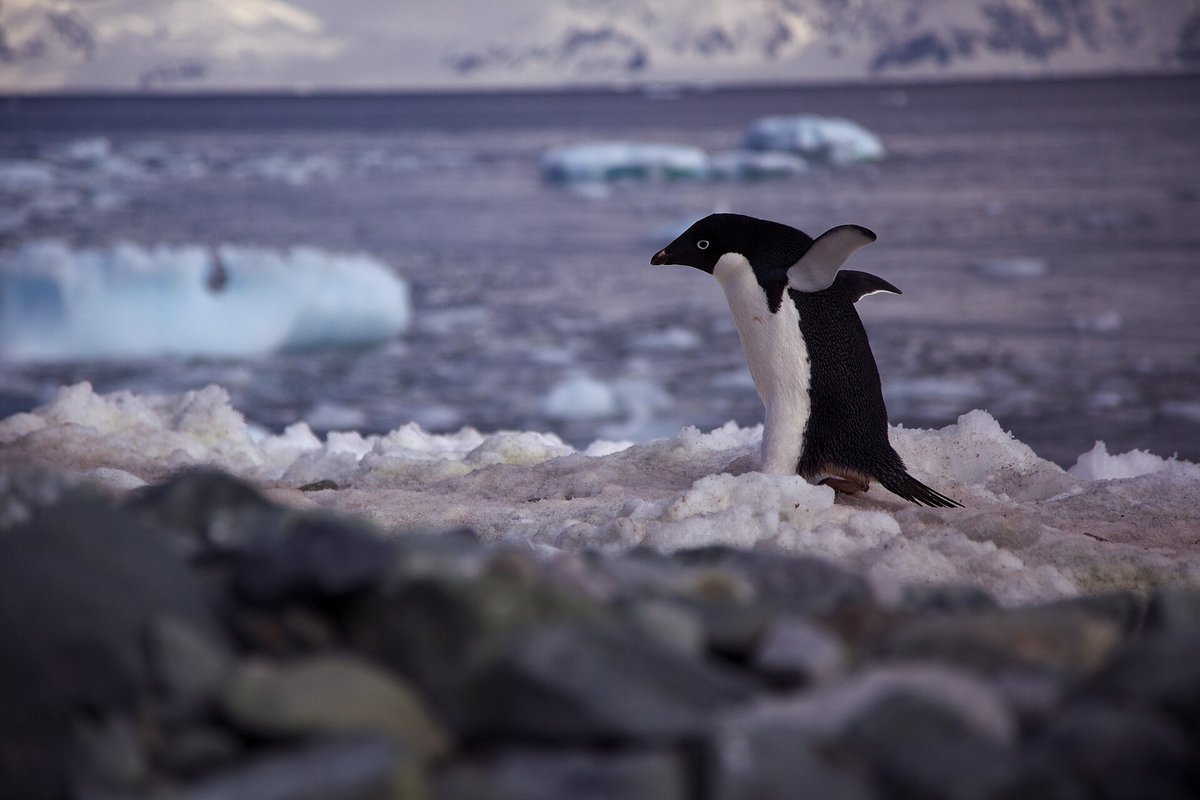
 Adélie Penguin Highway — Ross Sea Antarctica
Cape Royds, Antarctica, AQ