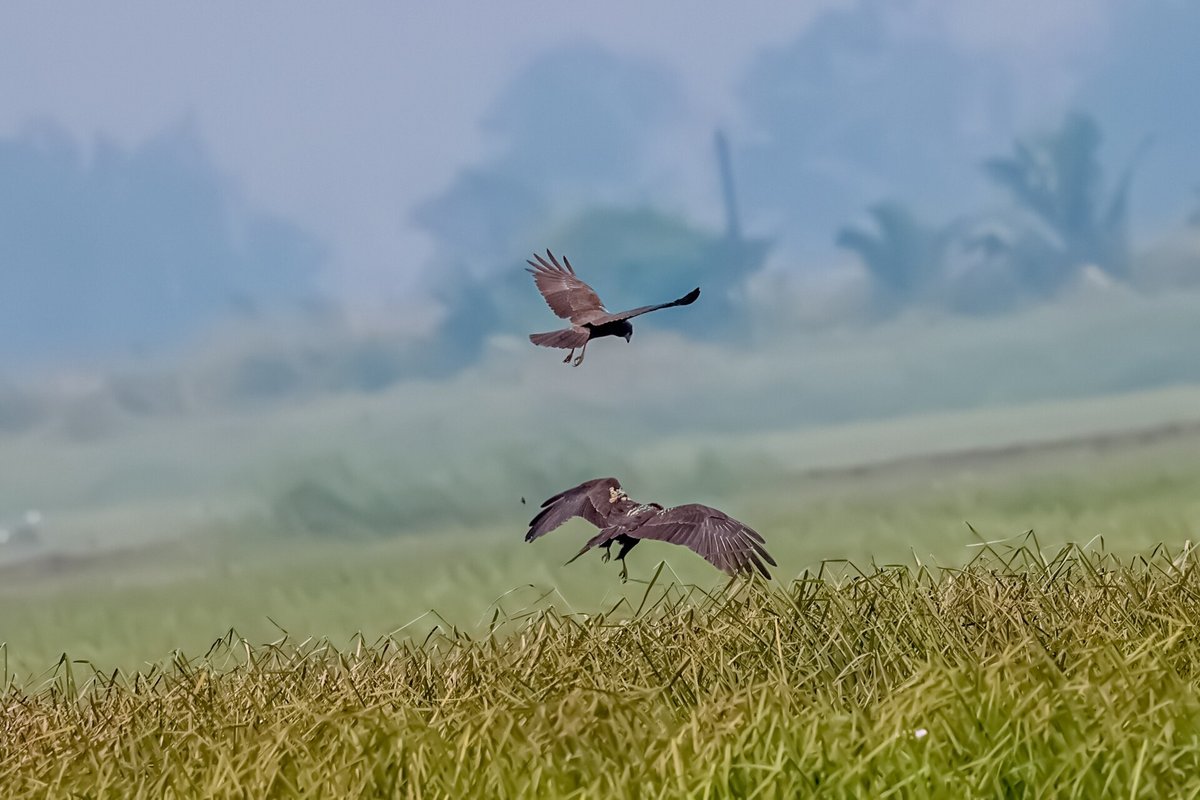
Marsh Harrier Gathering — Strumpshaw Fen
Each autumn and winter, the reed beds of Strumpshaw Fen in the Norfolk Broads host one of Britain's most spectacular marsh harrier pre-roost gatherings, with up to 25 birds assembling in the evening sky above the reed beds before dropping in to roost — a phenomenon that has grown from near-extinction in Britain to a regular daily spectacle within a single generation. The marsh harrier's recovery from just a single breeding pair in 1971 to over 400 pairs today is one of British conservation's greatest triumphs, and the Strumpshaw roost, viewed from the reserve's Tower Hide, delivers the extraordinary sight of multiple large raptors simultaneously performing slow buoyant display flights over the golden reed bed at dusk. In summer, the same fen hosts displaying bitterns booming from the reeds, swallowtail butterflies on milk parsley, and nesting bearded tits, making this one of England's most complete wetland wildlife reserves across all seasons. The Norfolk Broads landscape of wide reed beds, open water, and the distant sails of traditional wherries creates an atmospheric setting of considerable character. Winter visits combine marsh harrier roosts with hen harrier quartering the marsh margins in the last light.
About this spectacle
As dusk settles over Strumpshaw Fen, visitors at the Tower Hide watch the evening sky above the golden reed beds fill with marsh harriers — large, buoyant raptors riding slow, sweeping arcs before dropping silently into the reeds to roost. Up to 25 birds may gather simultaneously, wheeling low over the rustling phragmites in the fading autumn light, their broad wings catching the last warmth of the day. The spectacle is underscored by the atmospheric Norfolk Broads landscape: wide reed beds, open water, and the occasional distant sail of a traditional wherry. In winter, hen harriers may join the scene, quartering the marsh margins in the final minutes of usable light. The same reserve delivers year-round riches — booming bitterns in spring, swallowtail butterflies in summer, and bearded tits clinging to reed stems in all seasons. This is unhurried, contemplative wildlife-watching at its finest: a fixed viewing platform, no hiking required, and one of British conservation's most uplifting success stories unfolding in front of you each evening.
When to go
Jan — Dec, peak Oct — Feb
Getting there
Nearest airport: NWI. Nearest city: Norwich.
Booking options
Goyova doesn't process bookings directly. When you tap "Plan this trip" in the app, you'll see options from our partner providers — accommodation, tours, transport — with affiliate links where applicable. See our affiliate disclosure for details.
More like this.
 Peak season
 Aardvark Night Foraging — Kalahari Botswana
Maun, Central District, BW
 Peak season
 Aardvark Night Foraging — Kalahari South Africa
Upington, Northern Cape, South Africa
 Returns Jan 2027
 Adélie Penguin Highway — Ross Sea Antarctica
Cape Royds, Antarctica, AQ