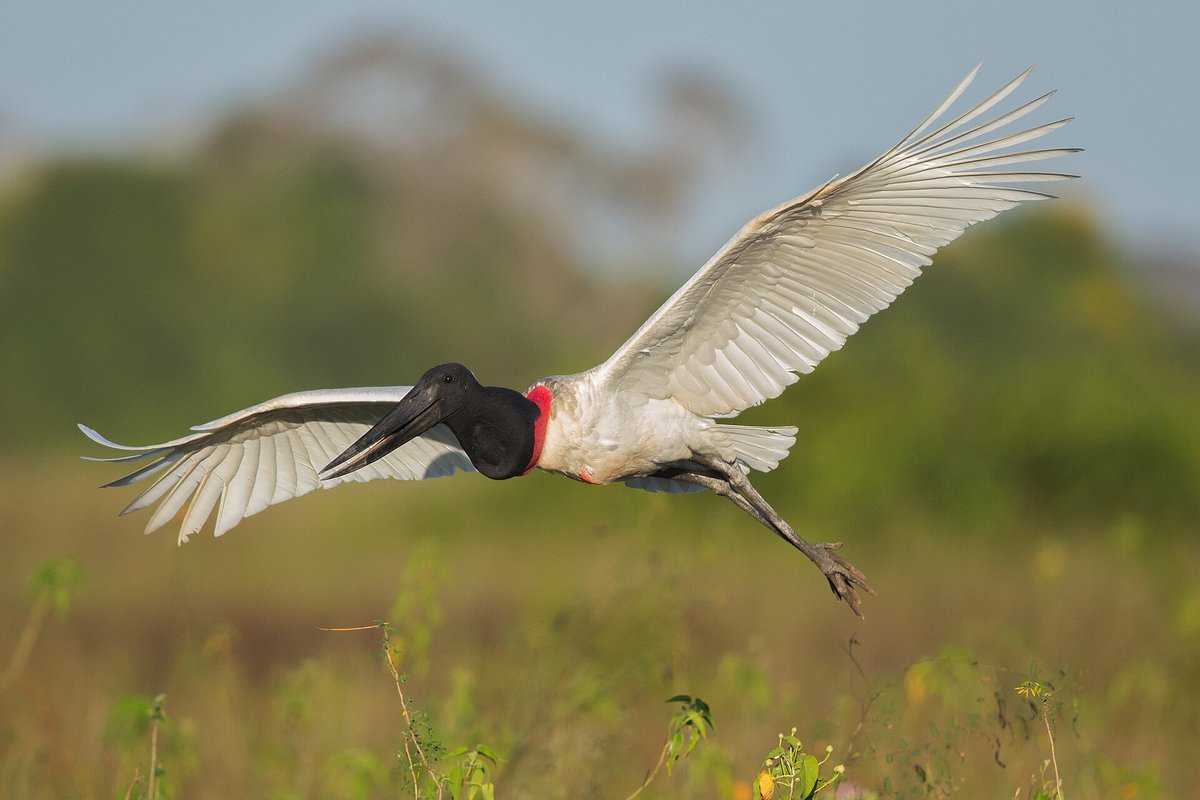
Jabiru Stork Colony — Pantanal Brazil
The jabiru stork (Jabiru mycteria) — the Americas' tallest flying bird at 1.4 metres, its bare red throat pouch inflating during display and visible from 300 metres — nests in the Pantanal's tall trees in colonies of 10–30 pairs from July through October, the enormous nest platforms (2 metres in diameter, used for decades) towering above the floodplain's tree line. The jabiru's combination of its extraordinary size, the bare black head and red throat pouch, and the nest's conspicuousness (visible from 1 kilometre) makes it the Pantanal's most easily located large bird, and the nesting colony's chick-rearing activity (the chicks' comical development from white fluffy balls to full-sized fledglings over 3 months) provides one of South America's most reliably observed large bird breeding cycles. The jabiru's Portuguese name ('swollen neck') reflects the throat pouch display that serves the same social function as the great bustard's foam-bathing in Europe.
About this spectacle
Standing at 1.4 metres tall, the jabiru stork is the Americas' largest flying bird and the undisputed centrepiece of the northern Pantanal. From July through October, colonies of 10–30 pairs occupy the crowns of the floodplain's tallest trees, their enormous nest platforms — two metres across and reused for decades — visible against the sky from a kilometre away. At dawn, the adults return and depart with slow, powerful wingbeats while the bare black heads and vivid red throat pouches catch the first light; the pouches visibly inflate during social displays, readable at 300 metres. Below the rim of each nest, chicks progress through a three-month arc from white fluffy balls to near-full-sized fledglings, the colony alive with wing-stretching, bill-clattering, and parental food deliveries. The scale of the birds, the architectural drama of the towering nests, and the reliability of the breeding calendar combine to give visitors a front-row seat to one of South America's most dependable large-bird breeding spectacles.
When to go
Jul — Oct
Getting there
Nearest airport: CGB. Nearest city: Cuiabá.
Booking options
Goyova doesn't process bookings directly. When you tap "Plan this trip" in the app, you'll see options from our partner providers — accommodation, tours, transport — with affiliate links where applicable. See our affiliate disclosure for details.
More like this.
 Peak season
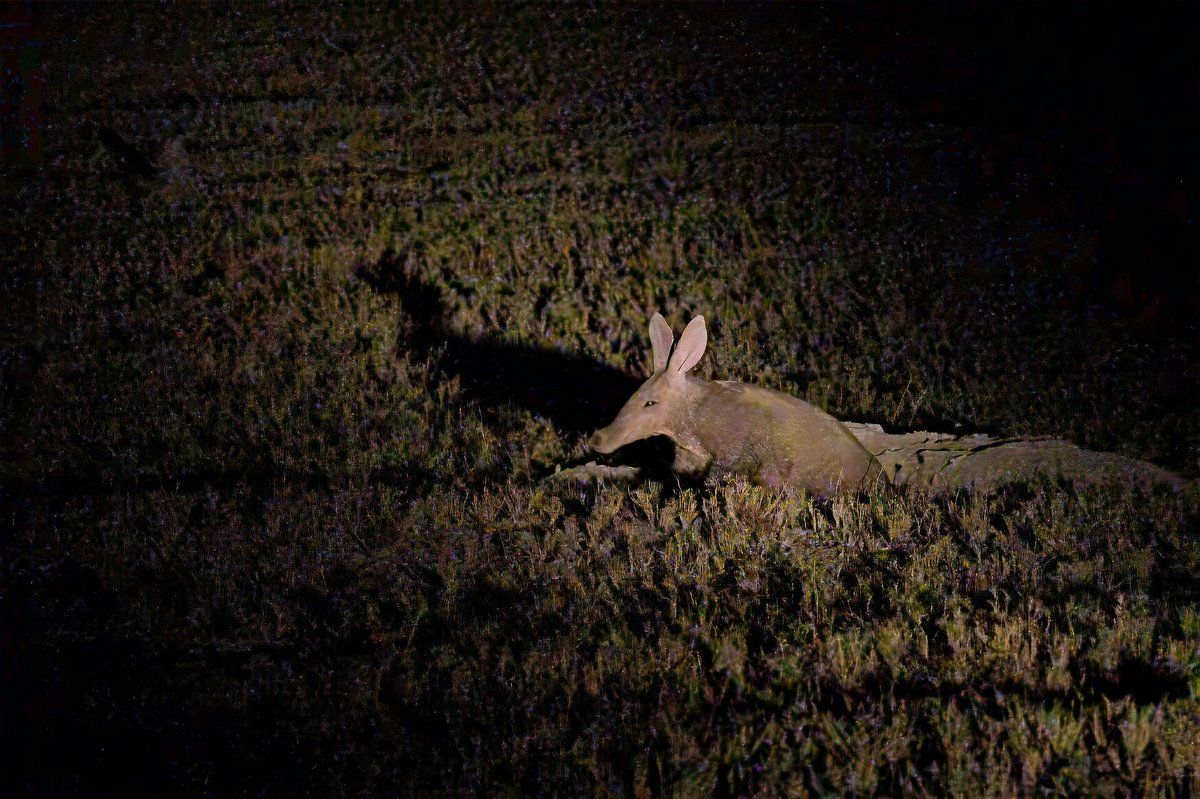
 Aardvark Night Foraging — Kalahari Botswana
Maun, Central District, BW
 Peak season
 Aardvark Night Foraging — Kalahari South Africa
Upington, Northern Cape, South Africa
 Returns Jan 2027
 Adélie Penguin Highway — Ross Sea Antarctica
Cape Royds, Antarctica, AQ