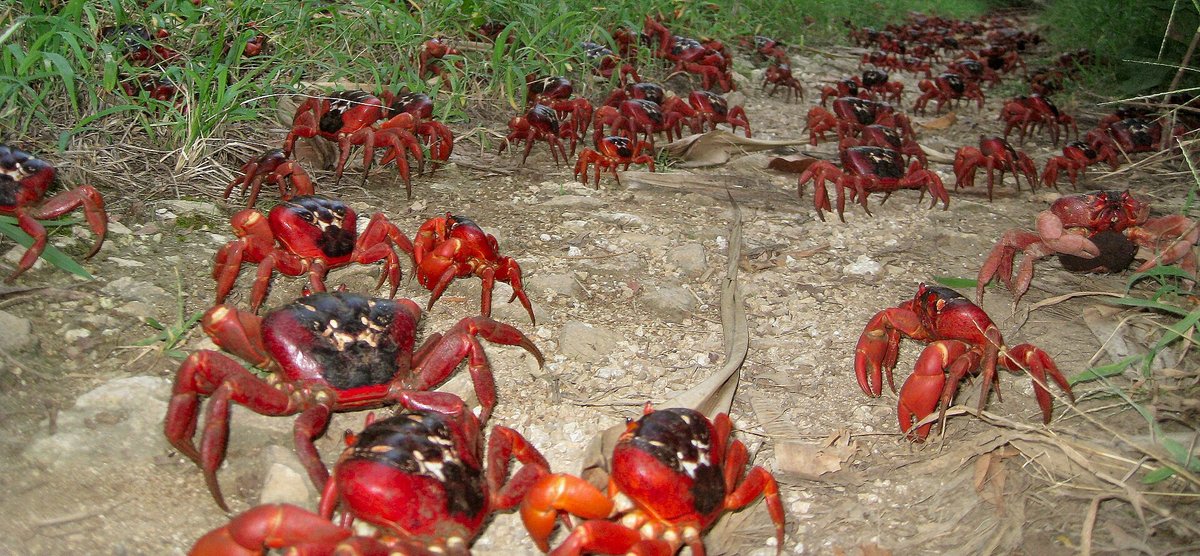
Christmas Island Red Crab Migration — Indian Ocean
The Christmas Island red crab (Gecarcoidea natalis) migration from the forest to the sea for breeding — 50 million crabs moving simultaneously from the island's interior plateau to the coast from October through December, their red bodies covering every road, path, and beach in a moving carpet — is one of the world's most visually extraordinary migration events. The island's roads are officially closed during peak crab migration, and the Department of Parks rangers redirect traffic to prevent vehicle casualties. The crabs' descent of the cliffs to the sea, the males' early arrival and wait for females, the female's egg release into the surf at the exact moment of the high tide's turn, and the megalopa larvae's return migration inland as tiny crabs 25 days later complete a biological cycle of remarkable precision. Christmas Island's unique ecological character — endemic birds, Abbott's booby colony, and the forest ecosystem the crabs themselves fertilise — makes it the Indian Ocean's most biologically extraordinary island.
About this spectacle
Each year from October through December, roughly 50 million Christmas Island red crabs emerge from the island's interior rainforest and pour downhill toward the coast in a living red tide. Every road, path, cliff face, and beach is carpeted in their brick-red bodies — a spectacle so dense that the island's roads are officially closed and rangers redirect traffic to protect the crabs. Visitors watch columns of crabs descend steep sea-cliffs, males waiting at the shore while females arrive to mate, and then witness the females releasing eggs into the surf at precisely the turn of the high tide. About 25 days later, megalopa larvae transform into tiny crabs and begin the return march inland — a second, miniature migration in its own right. The soundscape of millions of claws on rock and leaf litter, the smell of the ocean mixing with the forest, and the sight of roads literally paved with red shells create a genuinely overwhelming sensory experience that no wildlife film fully captures. Park rangers and crab barriers guide visitors safely alongside the flow.
When to go
Jan — Dec, peak Oct — Dec
Getting there
Nearest airport: XCH.
Booking options
Goyova doesn't process bookings directly. When you tap "Plan this trip" in the app, you'll see options from our partner providers — accommodation, tours, transport — with affiliate links where applicable. See our affiliate disclosure for details.
More like this.
 Peak season
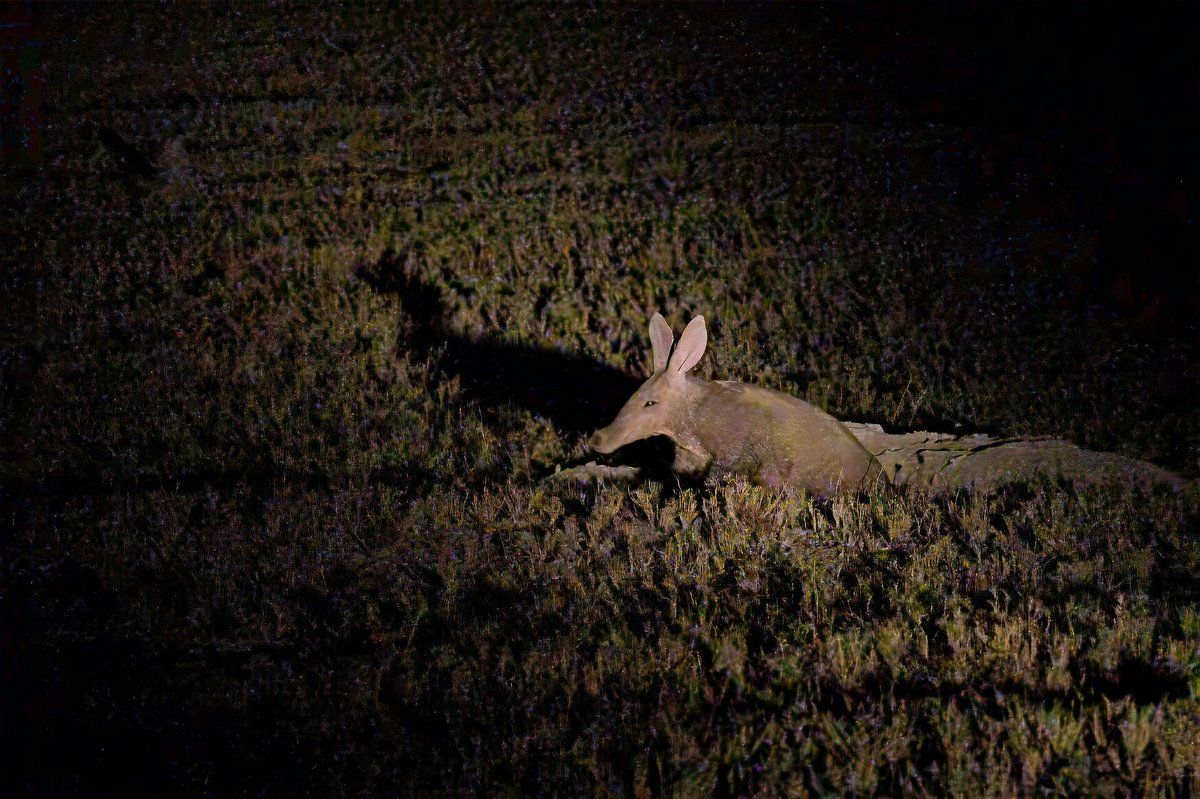
 Aardvark Night Foraging — Kalahari Botswana
Maun, Central District, BW
 Peak season
 Aardvark Night Foraging — Kalahari South Africa
Upington, Northern Cape, South Africa
 Returns Jan 2027
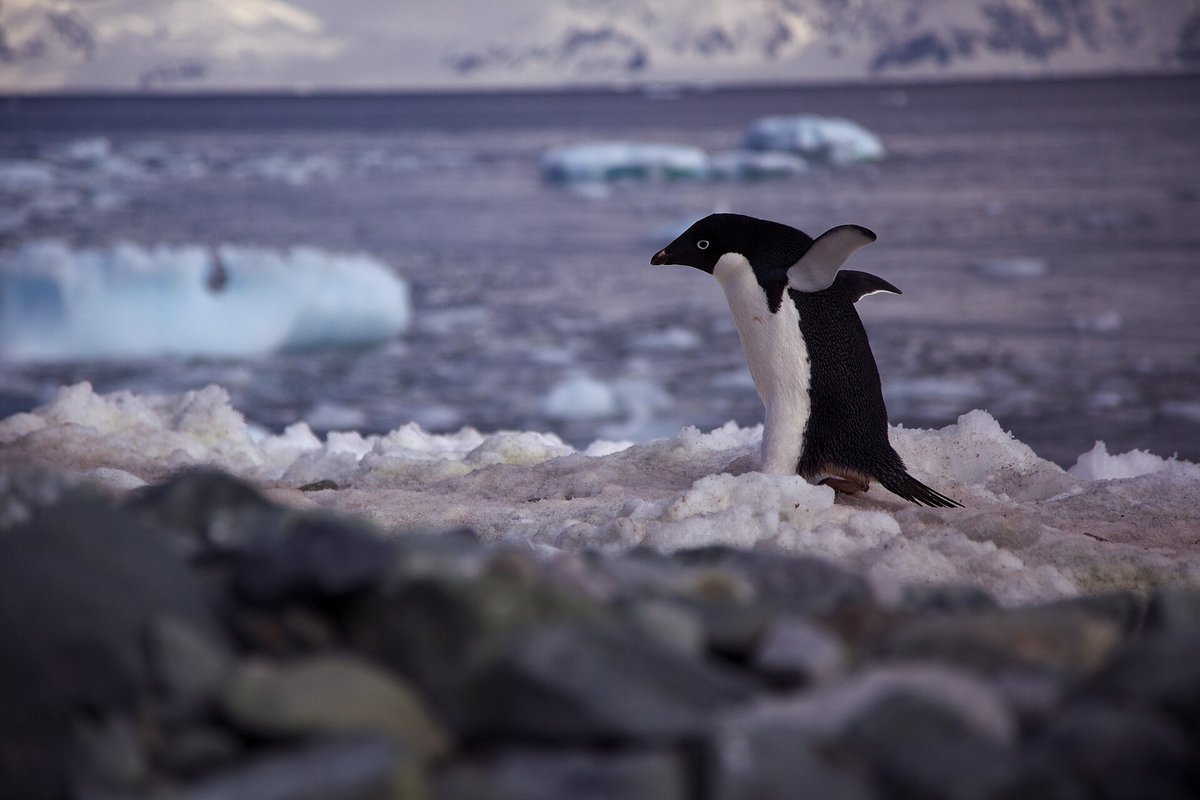
 Adélie Penguin Highway — Ross Sea Antarctica
Cape Royds, Antarctica, AQ